
Why Digital Marketing is a Great Career: Opportunities, Growth, and Flexibility
Is digital marketing a good career? An honest look at why people choose it, the main roles, the skills that matter, the downsides and how to get started without a degree in it.
By Suren, Founder & Growth Strategist at Gufy · Published · Last updated
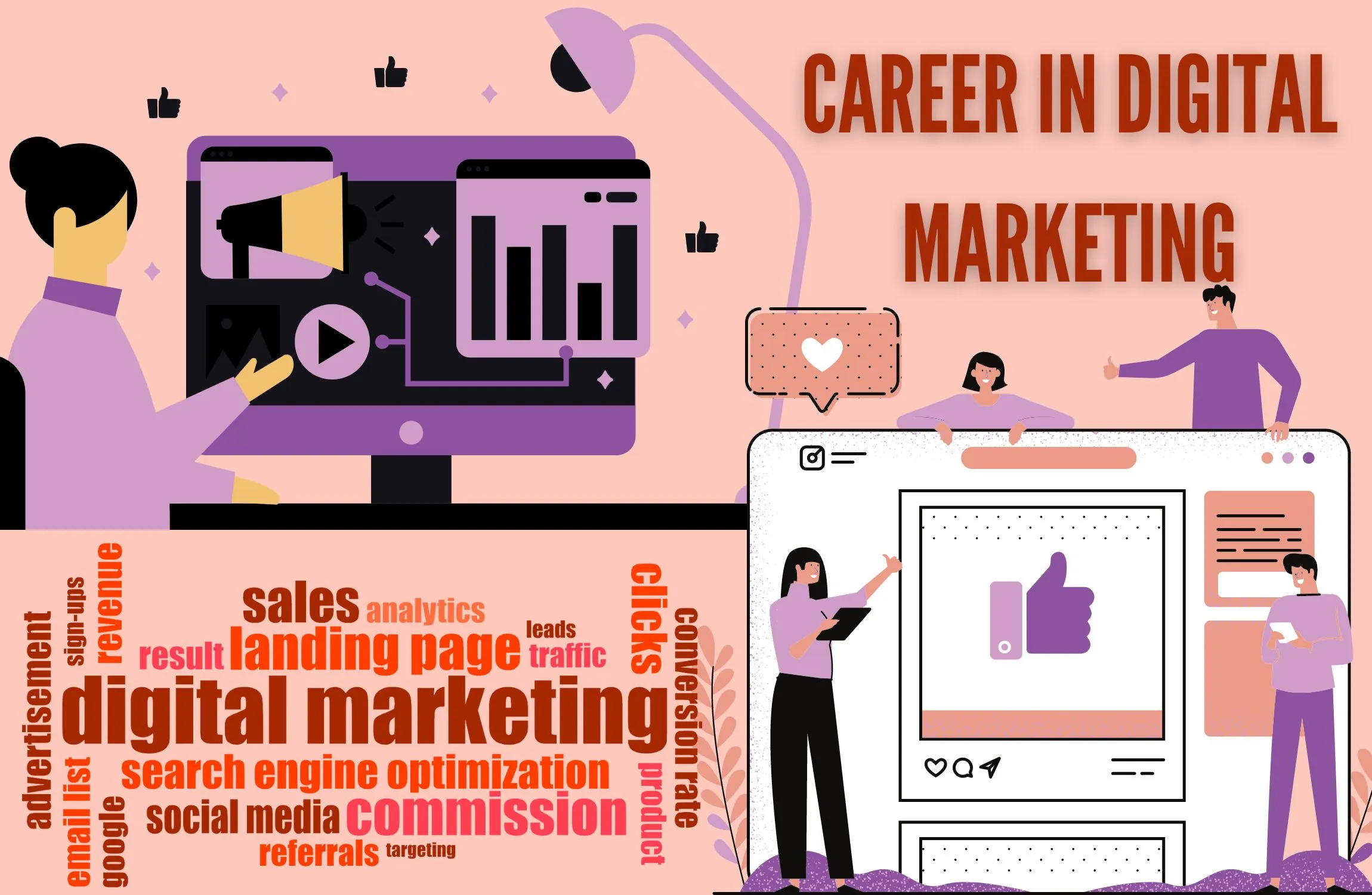
Digital marketing is a good career for people who like variety, measurable results and constant learning. Almost every business needs it, you can start without a specific degree, and the skills transfer between industries and countries. It is not for everyone, and this article covers the downsides as well.
Why people choose digital marketing
Demand is broad
Any business that sells online, or wants to be found online, needs people who understand search, advertising, content and data. That covers nearly every industry, so the skills are not tied to one sector.
You can start without a specific qualification
Many people enter from other fields. What employers and clients look for is evidence that you can do the work.
The work is flexible
Most of it needs a laptop and an internet connection. Remote roles, freelancing and consulting are all common.
There are many directions to grow in
You can specialise deeply in one area, broaden into strategy and management, move in-house or to an agency, or work for yourself.
Results are visible
You can see what a campaign produced. For people who like knowing whether their work made a difference, that is satisfying.
It combines creative and analytical work
Writing and design sit beside data and testing. Few fields use both so directly.
Key roles in digital marketing
| Role | What the work involves | Suits people who |
|---|---|---|
| SEO specialist | Helping websites appear in search results | Like research and patient, long-term work |
| Paid media specialist | Running advertising on search and social platforms | Like numbers, testing and quick feedback |
| Content marketer | Planning and writing articles, guides and video | Like writing and explaining |
| Social media manager | Running a brand's social presence | Understand online culture and tone |
| Email and lifecycle marketer | Messages that onboard, retain and win back customers | Like systems and customer behaviour |
| Marketing analyst | Measuring what works and explaining why | Like data and clear thinking |
| Conversion optimisation specialist | Testing changes to pages and flows | Like experiments and psychology |
| Growth marketer | Working across the whole customer journey | Like variety and ownership of results |
| Marketing manager | Planning, budget and leading a team | Like strategy and working with people |
Skills that matter
- Writing clearly. It underpins almost every role.
- Reading data. Knowing which numbers matter and what to do about them.
- Understanding customers. Why people buy, and what stops them.
- Testing. Trying things in a measured way and learning from the results.
- Knowing the tools. Analytics, advertising platforms, email tools, and increasingly AI tools.
- Curiosity. Platforms and methods change every year.
The downsides
An honest picture includes these.
- It never stops changing. What you learned two years ago may be out of date.
- You are judged on numbers. That is motivating for some people and stressful for others.
- Results are not fully in your control. A product people do not want cannot be fixed with marketing.
- Entry-level work can be repetitive. Reporting, scheduling and set-up come before strategy.
- AI is changing the work. Routine tasks are being automated, so the value is moving towards judgement and strategy.
- Agency work can be pressured. Several clients, tight deadlines.
How to get started
- Choose one area to begin with. You can broaden later.
- Learn the basics for free. Google, Meta and HubSpot all publish free courses, and there is a great deal of good free material online.
- Do real work as soon as you can. Run a small campaign for a local business, a charity or your own project. Even a tiny budget teaches more than a course.
- Measure and write it up. What you tried, what happened, what you would do differently. That is your portfolio.
- Apply for junior roles, internships or freelance work with that portfolio.
- Keep learning. Follow a few practitioners whose work you respect and keep testing things yourself.
How to succeed once you are in
- Tie your work to business results. Revenue and customers, not likes and impressions.
- Go deep in one skill, and understand the rest. A specialist who sees the whole picture is rare.
- Learn to explain. Being able to tell a non-marketer what happened and what to do next sets you apart.
- Stay close to customers. Read support conversations and sit in on sales calls.
- Be honest about what did not work. It builds trust faster than anything else.
To see what the work looks like in practice, read Digital Marketing for Startups and Mobile App Growth Hacking.
Common questions
Is digital marketing a good career?
For many people, yes. Almost every business needs it, the work can be done from anywhere, results are measurable, and you can start without a specific degree. It also changes constantly and can be pressured, so it suits people who like learning and are comfortable being judged on numbers.
Do I need a degree to work in digital marketing?
No. Employers generally care more about what you can show than what you studied. A small portfolio of real work, such as a campaign you ran, a site you grew or an account you managed, counts for more than a certificate.
Which digital marketing skill is most in demand?
Demand shifts, but skills tied directly to revenue hold their value: paid advertising, analytics and measurement, conversion optimisation and lifecycle marketing. Being able to read data and explain what to do about it is useful in every role.
Will AI replace digital marketing jobs?
AI is changing the work more than removing the need for it. Routine tasks such as first drafts, reporting and basic ad set-up are increasingly automated. Judgement about customers, strategy, creative direction and interpreting results is harder to automate. People who learn to work with these tools are better placed than those who avoid them.
How do I start a career in digital marketing?
Pick one area, learn the basics from free courses, then do real work as soon as possible. Run a small campaign for a local business, a charity or your own project, measure what happened, and write it up. Use that to apply for junior roles, internships or freelance work.
Conclusion
Digital marketing rewards people who are curious, comfortable with numbers and willing to keep learning. It offers flexibility and many routes forward, in return for a field that does not stand still. If that sounds like you, the best way in is to start doing real work, however small.