
Airbnb’s Craigslist Strategy: A Game-Changing Growth Hack
How Airbnb used Craigslist to grow: what the integration did, why it worked, the part of the story that is usually left out, and what a startup can take from it today.
By Suren, Founder & Growth Strategist at Gufy · Published · Last updated
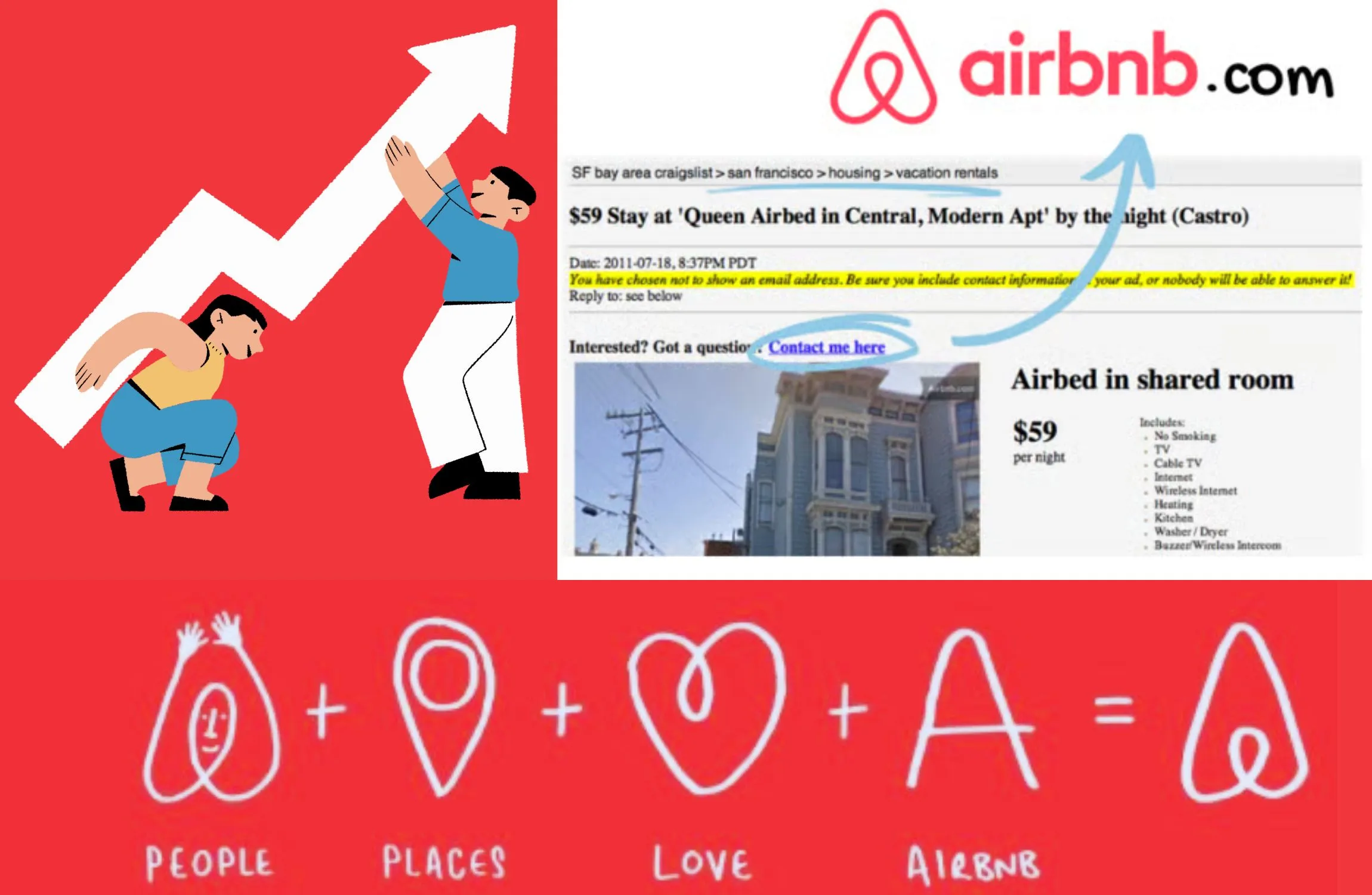
Around 2010, Airbnb gave its hosts a simple option: publish your Airbnb listing on Craigslist as well. Craigslist already had the audience Airbnb needed. Each cross-posted listing linked back to Airbnb, so Airbnb borrowed that audience at almost no cost. It has become one of the most quoted growth hacking stories.
This article explains what the integration did, why it worked, the part of the story that is usually left out, and what a startup can take from it today.
The challenge: growing a marketplace from nothing
Airbnb's idea was simple: a place where people could rent out a spare room or a home. But a marketplace needs two groups at once. Without hosts there is nothing for guests to book. Without guests there is no reason for hosts to list.
In its early days Airbnb had neither in large numbers, little money for marketing, and a concept many people found strange. It needed a way to reach hosts and guests that did not depend on a large budget.
The growth hack: the Craigslist integration
At the time, Craigslist was where many people looked for short-term rentals and rooms. Airbnb's team saw that the people they wanted were already there. Instead of paying to attract them somewhere new, they went to where they were.
Here is how it worked:
- A host created a listing on Airbnb.
- Airbnb offered to post the same listing on Craigslist for them.
- The host accepted, and the listing appeared on Craigslist with a link back to Airbnb.
- People browsing Craigslist clicked through and booked on Airbnb.
The difficult part was technical. Craigslist had no official way for another site to post listings. Airbnb's engineers worked out how Craigslist's own posting form behaved and built a tool to complete it on the host's behalf. Andrew Chen described the detail in a widely read 2012 analysis, which is how the story became well known.
Why it worked
- The audience was already there. Craigslist had the traffic. Airbnb did not have to create demand.
- It took one click. Hosts had every reason to say yes, because it brought them more enquiries for no extra work.
- Airbnb's listings stood out. Better photographs and more personal descriptions made them more appealing than a typical Craigslist post.
- Every listing was an advert for Airbnb. People who clicked through discovered a site built for exactly what they were looking for.
The part of the story usually left out
Most accounts stop there. Two more facts matter.
It was not an official partnership. Automated posting was against Craigslist's terms of use, and Craigslist later closed off the method. The integration stopped working.
There was a second, more controversial tactic. In 2011 it was reported that people working for Airbnb had been contacting those who posted rentals on Craigslist, inviting them to list on Airbnb while presenting themselves as ordinary users. Airbnb acknowledged that sales contractors had done this and said it was not a tactic the company condoned.
This does not make the story less useful. It makes it more honest. The growth was real, and so was the risk of building on a platform that had not agreed to it.
Growth hacking techniques this story illustrates
Go where your audience already is
Airbnb's future hosts and guests were already on Craigslist. Building a new audience from nothing is slow and expensive. Find the place your customers already use and work out how to be useful there.
Use an existing platform as a launch pad
Growth does not always mean building your own audience first. Marketplaces, app stores, directories and integrations with larger products can put you in front of people who are already looking.
Make it effortless for users to spread you
The clever part was not only choosing Craigslist. It was making cross-posting a single click. When the action that spreads your product is also in the user's own interest, and takes no effort, people do it.
Understand the risk of building on someone else's platform
Airbnb's method worked until Craigslist stopped it. Any growth that depends on another company's platform can be switched off by that company. Use the borrowed audience to build something of your own: direct relationships, repeat customers, a product people return to without the other platform.
Measure and improve
A tactic like this is only worth keeping if you can see what it produces. Track the visitors and customers each channel brings, and put your effort where the results are.
How to apply this today
The specific trick is long gone. The thinking behind it is not.
- List the places your customers already spend time. Marketplaces, software they already use, forums, directories.
- Look for an approved way in. Official integrations, partner programmes, app marketplaces and listings. These last, because the platform wants you there.
- Make the sharing action serve the user. People spread things that help them.
- Send people somewhere better. Airbnb won because its own site was a better experience than the listing people came from.
- Do not depend on it for ever. Use the first wave to build direct relationships.
For another example of unconventional growth, see How Netflix's Recommendation Engine Drives Success. For applying these ideas to a product today, see Mobile App Growth Hacking and B2B Growth Hacking.
Common questions
What was the Airbnb Craigslist growth hack?
Around 2010, Airbnb gave hosts an option to publish their Airbnb listing on Craigslist as well. Craigslist had a huge audience looking for places to stay, and each cross-posted listing linked back to Airbnb. It brought Airbnb visitors and bookings from a site its future customers already used, at almost no cost.
How did Airbnb post to Craigslist without an API?
Craigslist offered no official way for other sites to post listings. Airbnb's engineers worked out how Craigslist's own posting form behaved and built a tool that filled it in on the host's behalf, then handed the host a link to publish. Andrew Chen's 2012 analysis of the integration describes the technical detail.
Was the Airbnb Craigslist hack allowed?
It was not an official partnership, and automated posting was against Craigslist's terms of use. Craigslist later closed off the method. Separately, in 2011 Airbnb acknowledged that sales contractors had contacted Craigslist posters while presenting themselves as ordinary users, and said it did not condone the tactic.
Does the Airbnb Craigslist hack still work?
No. The integration stopped working years ago. The idea behind it still applies: find where your future customers already are and give them an easy route to you, ideally through integrations and marketplaces that welcome it.
Final thoughts
Airbnb's Craigslist integration shows how far a small team can get by understanding where its customers are and removing the effort of reaching them. It also shows the limits of growth that rests on someone else's platform.
If you are working out where your own first customers will come from, Gufy helps startups find and test acquisition channels, with the tracking to see what each one brings. Book a growth call.